
Travel Blog
Bearing Witness in Poland
March 17, 2026
Over the past several days, our Jewish Heritage Trip group traveled through Poland, encountering a complex and deeply layered chapter of Jewish history.
The group visited Chełmno extermination camp, the first site of mass murder using gas trucks. Students learned how entire communities, including those from nearby towns, were sent there under the guise of relocation. Through a survivor’s testimony — a 13-year-old forced to sort through victims’ belongings — they were confronted with the human reality behind the history. The visit concluded with Kaddish and the singing of Eli Eli.
.jpg)
From there, the group continued to Warsaw, once home to 350,000 Jews. Established in 1806, the Warsaw Jewish Cemetery is one of the largest Jewish cemeteries in the world. “It was sprawling,” Eric F. reflected. “It really illustrated how large our faith is.”
.jpg)
That understanding deepened at the Warsaw Ghetto Monument at Mila 18, where they learned about the uprising and resistance. Sitting on the steps above a bunker where the leader of the Warsaw resistance hid, they considered not only what happened there, but how Jews responded with organization, courage, and defiance.
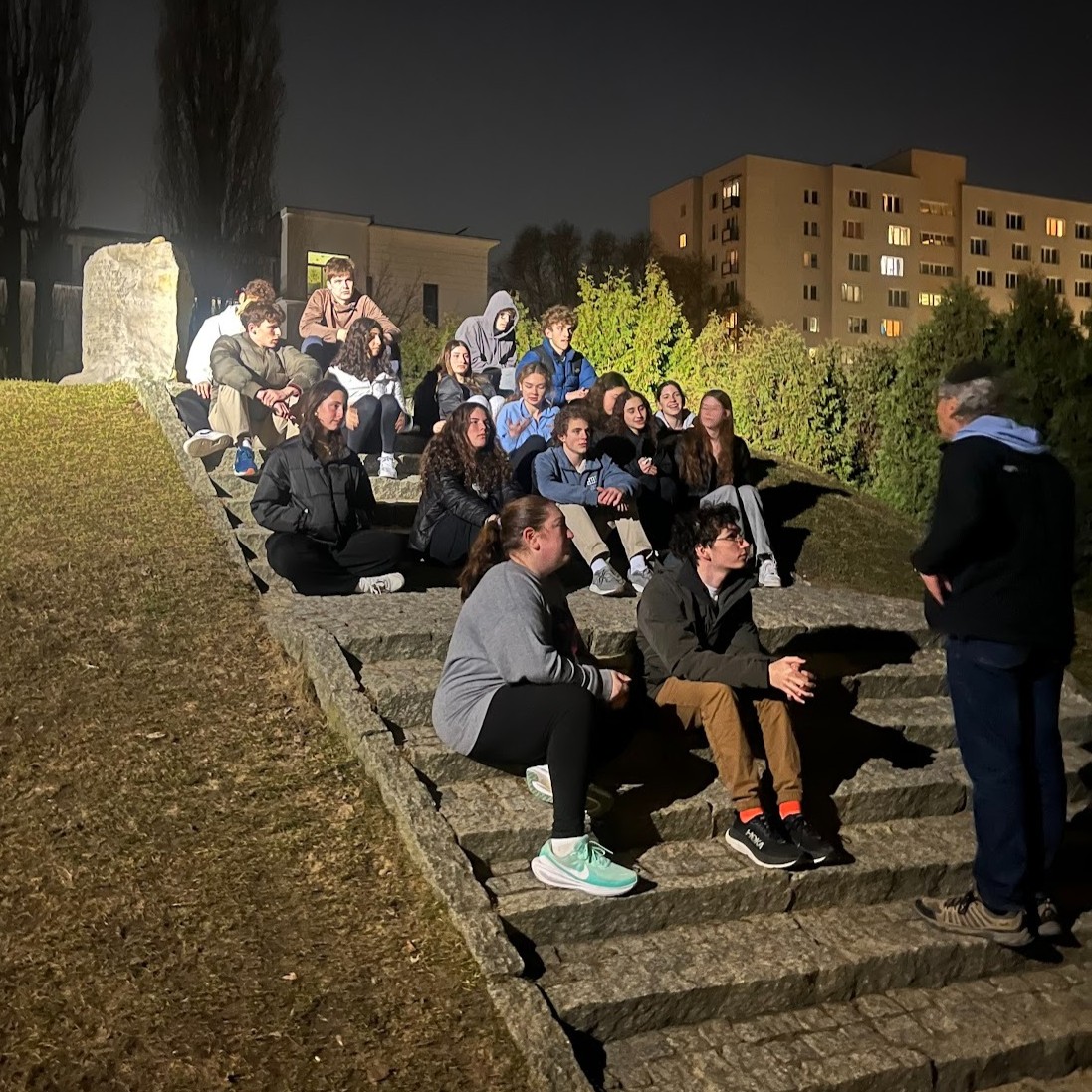
The journey through history continued at Majdanek concentration camp. Walking through preserved barracks, gas chambers, and crematoria, students encountered the physical reality of the camp.
“It put into perspective the number of people who died,” Eric F. said.
Others noticed something else: “People visited Majdanek like it was a museum… we have such a strong connection to this, and it is inconsequential to 99% of the world,” shared another student.
.jpg)
In Łańcut, students stepped into an 18th-century synagogue that still stands despite having no Jewish community left.
.jpg)
Legend says that when construction began in 1761, the rabbi came each day to bless every stone. Because of this, the building endured through time, even when the Nazis set it on fire. Local non-Jewish residents put out the flames, hoping to preserve it for the Jewish families they believed would return. None did.
Today, the synagogue is maintained by a non-Jewish caretaker who told the group, “The biggest miracle is that there are Jews here now.”
.jpg)
“It’s beautiful—much bigger than I thought it would be,” Eliezer R. shared. “I’m in awe of the beauty a sanctuary can have,” added Dani G.
In Tarnów, once a vibrant shtetl, the group stood at the remains of the burned bimah of the synagogue and sang Aleinu together.
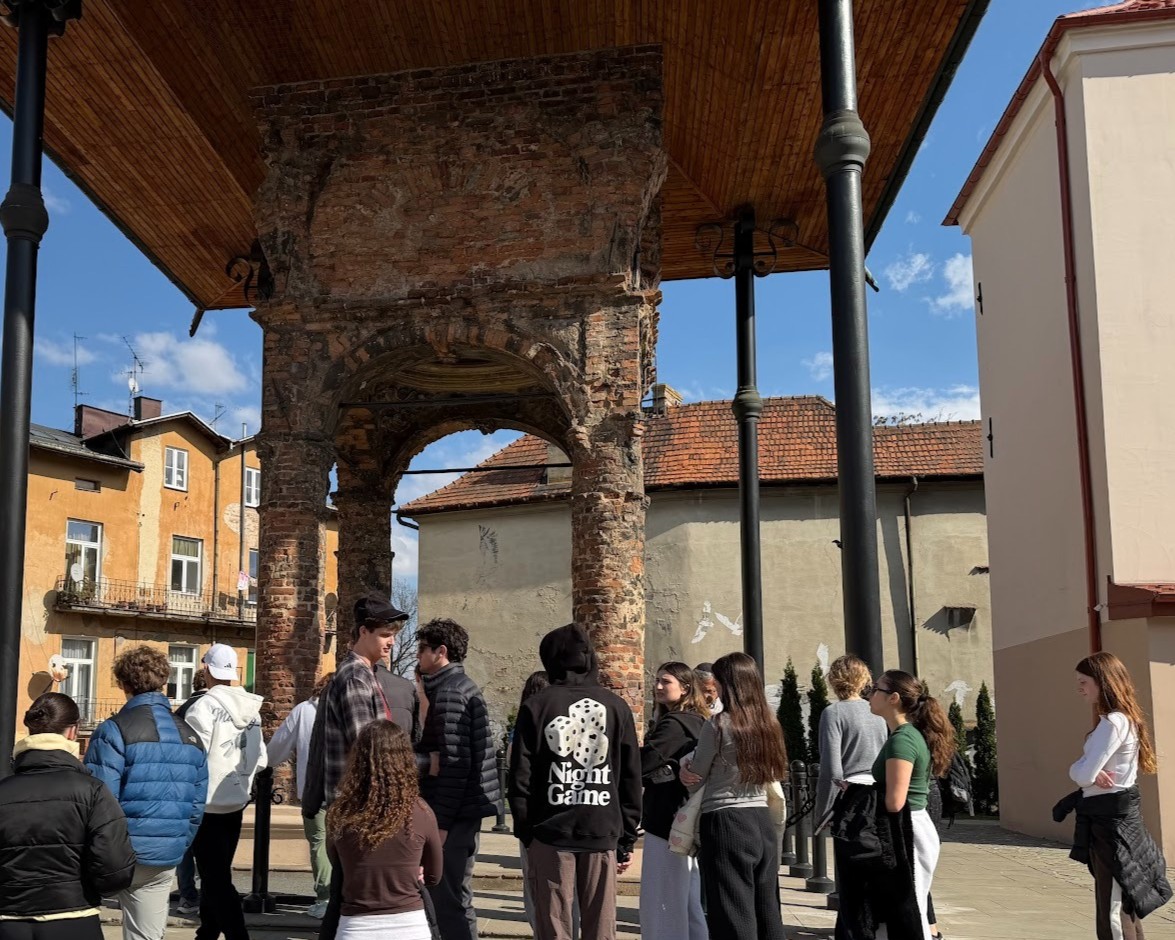
Nearby, in a forest where the children of Tarnów were murdered and buried in mass graves, students lit candles and read letters from home.
“Seeing the mass graves was jarring. You couldn’t see anything left. If we hadn’t had a tour guide, you would never have known it existed,” one student shared.
“Reading my parents’ letter was so hard at the mass grave,” shared another.
.jpg)
After days spent learning about a dark time in our history, the group welcomed in the light of Shabbat in Kraków.
.png)
Friday night services took place in a historic temple that stood through World War II after being used by the Nazis as a horse stable. While it is no longer an active synagogue due to the small remaining Jewish population, that evening it was filled with ruach and prayer. HBHA students, together with students from a Modern Orthodox school in England, brought energy and joy into the space.
“The other Jewish students from England were experiencing the same things as us,” shared a student. “It was nice to have that connection.”
The next morning at the Remuh Synagogue, built in 1558, the students walked in to find only five other Jewish men: two Israelis living in Poland, one Ukrainian refugee, and two Poles. HBHA students not only completed the minyan, but also helped lead the service.
Eliezer, Shai, Ethan, and Eric took active roles in the service, standing on the bimah, holding, wrapping, and reading Torah. In a place where Jewish life is small and fragile, our students became essential to sustaining it in that moment.
.jpg)
During Shabbat, the group continued exploring Kraków. Lunch included cholent, pierogi, potato kugel, rice, salads, and challah. The students sang a niggun and other songs to build ruach.
As they walked through the city, the group passed through a large square in the Kraków ghetto, marked by many oversized chair sculptures. A memorial to Jews of Krakow who were murdered, each of the 70 chairs represents one thousand lives.
.jpg)
After some shopping, dinner, and Havdalah, the students ended their Sunday by journaling about their experience.
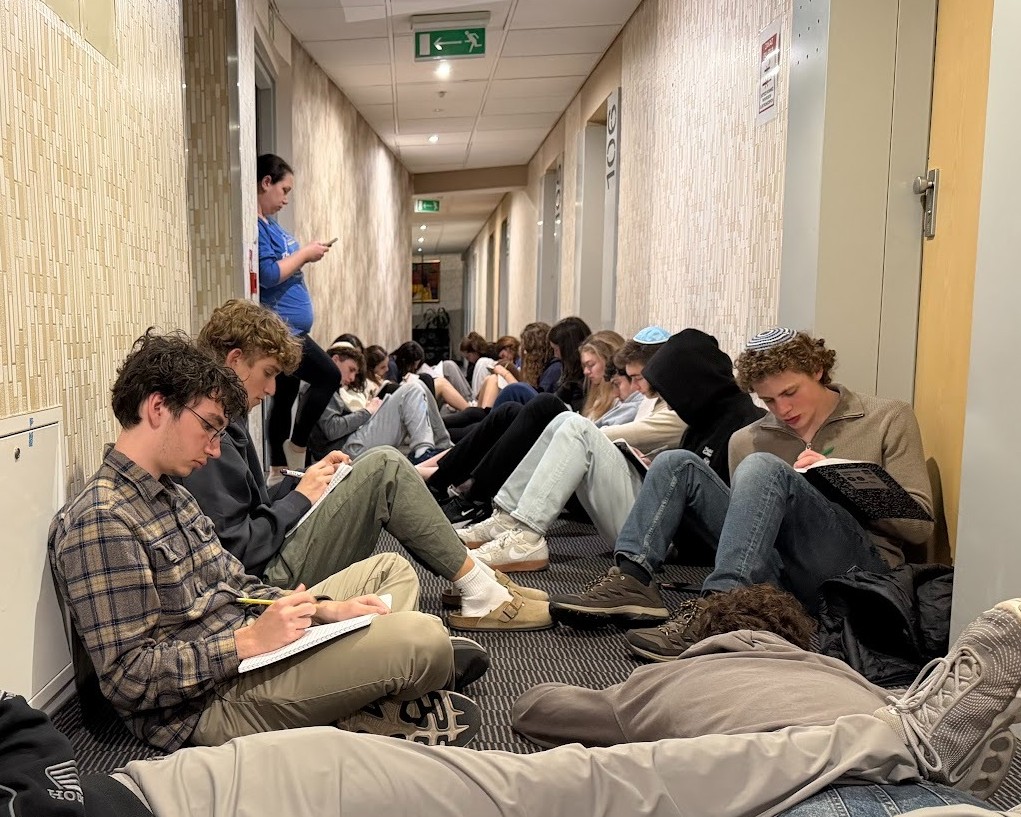
For chaperone Sam, an HBHA alumnus who once took this trip himself, the perspective has shifted. “There is a significant difference between how I interacted with it as a student versus now as a teacher,” he shared. “I feel very protective of the students and how they are doing emotionally as we go through these experiences together.”
.jpg)
The group concluded their time in Poland at Auschwitz & Birkenau, beginning the day with prayers under the camp’s entrance. As they moved through the site, they carried not just what they had learned, but how they had learned to approach it — with focus, questions, and a growing sense of responsibility.
.jpg)
They continued from Birkenau into Auschwitz I, immersing themselves within the sites and listening to testimonials of survivors (read by their tour guide). The group eventually came upon Yad Vashem’s collection of 5 million names of those mercilessly murdered during the Holocaust. Students were able to touch the lists, looking for traces of their own families.
.jpg)
At Auschwitz, Naama R. found her great-great-grandmother’s name in the records, connecting her family directly to the history around her.
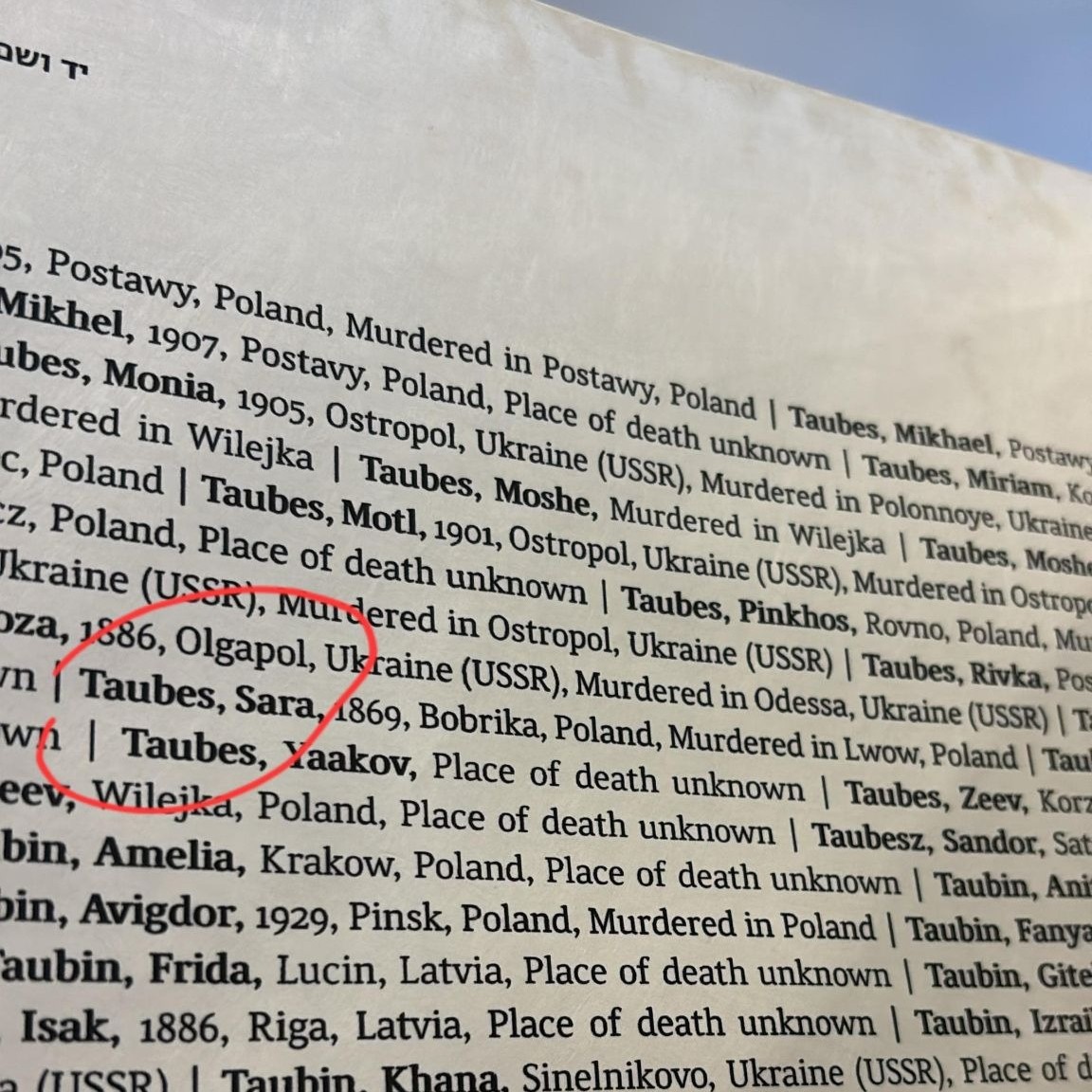
“We talk too much about how they died; we need to remember how they lived,” their guide reminded them. “The acts of defiance, smuggling in tefillin, celebrating Chanukah… we must remember.”
That balance between memory and continuity, history and responsibility, continues to shape the journey as the group moves forward.
Read about the Upper School student trips
Ninth- and tenth-graders embark on an eight-day Civil Rights Tour of the South, visiting historic sites, engaging in community service in Birmingham, and connecting with teens in Southern synagogues. This experience gives students a firsthand look at how Jews and African-Americans collaborated to create change and encourages reflection on modern-day social justice issues.
Eleventh- and twelfth-graders travel to Germany, Poland, Bulgaria, and Israel for a 22-day Jewish Heritage Trip. Students will visit key historical sites, engage with local Jewish communities, and explore Jewish life across diverse cultures, strengthening their connection to heritage, history, and global Jewish identity.