
Travel Blog
Posts Tagged "Jewish Heritage Trip"
Walking Through History
March 12, 2026
Over the past several days, our Jewish Heritage Trip group explored Berlin and continued their journey across Europe, moving through places where Jewish history is woven directly into the landscape.
One of the first stops in Berlin was the “Block of Women” monument, which commemorates a powerful moment of resistance during the Nazi regime. When Jewish men and their children were arrested and separated from their non-Jewish wives, thousands of women gathered publicly to demand their release. For days, the growing crowd of women stood together in protest — and eventually, the men and children were released.
.png)
.png)
While exploring Berlin, the group stopped at the Bundestag, Germany’s parliament building, formerly known as the Reichstag.
The students also saw the New Synagogue of Berlin, once one of the largest synagogues in the city, capable of holding nearly 2,000 people. After being damaged during the war, the synagogue was rebuilt and today stands as a symbol of the resilience and continuation of Jewish life in Berlin.
.jpg)
That evening, the group had dinner at a local Chabad house. The room was full of singing, clapping, and excitement. The rabbi, who happened to be the brother of our own Rabbi Tiechtel, spoke about how meaningful it was to see young Jewish adults gathered in Berlin — a place where, not long ago, Jewish people had been driven out — and shared his joy in witnessing students bringing life into the space once denied to them.
The next day brought the group to Platform 17, a quiet train platform that once served as a departure point for tens of thousands of Jews deported from Berlin to ghettos and death camps across Europe. Today, the memorial is built directly into the tracks. Each steel plate is engraved with a date, the number of people deported, and the train’s destination.
.jpg)
Some victims threw letters from the train windows as they were taken away, hoping someone might find them. Standing on the platform, students honored this act by writing letters to their loved ones.
.jpg)
“Attending Platform 17 was a surreal experience to say the least. Absorbing our surroundings while understanding the significance of them to our history is a difficult task, but this location really allowed the overlap to begin,” shared senior Gabby S. “Our tour guide brought to our attention the impact and the reality of our ability to leave Platform 17 and move on with our trip — something all Jews brought there in 1941-45 never did. This was one of the most memorable and impactful experiences of the trip so far.”
.jpg)
The group then traveled to the lakeside town of Wannsee. Despite its peaceful surroundings, the villa there was the site of the infamous Wannsee Conference, where Nazi officials formalized plans for the “Final Solution.” Inside, students toured the rooms where the decisions were made and saw firsthand how ordinary spaces were used to plan extraordinary atrocities.
(1).png)
On Tuesday, the group made its way into Poland. Upon arriving in the city of Poznan, they visited a synagogue with a remarkable history. Before the Holocaust, the shul was the heart of the Jewish community. During the war, the Nazis repurposed the building as an indoor swimming pool, since it was too large to destroy. After the war, the small community (around 40 people) raised enough money to buy back their old synagogue and begin its restoration. Today, the building has been reclaimed and restored, with weekly Shabbat services held in the nearby community center.
.jpg)
Junior Ruby S. reflected on the visit: “It showed me how important it is to value our heritage and to take back what is ours. These Jews did everything they could just so that they could preserve Jewish buildings for their small community.”
As the trip continues, the group is experiencing firsthand the resilience, dedication, and enduring spirit of Jewish communities across Europe. From monuments to synagogues, each stop offers a chance to connect with history, reflect on its lessons, and see how Jewish communities have preserved their heritage against incredible odds.
.jpg)
The Journey Begins
March 09, 2026
Last Thursday, our Jewish Heritage Trip group set out for Europe. In the interest of student safety, we will share specific locations only after the group has moved on from them. For now, we are excited to share moments from the journey.
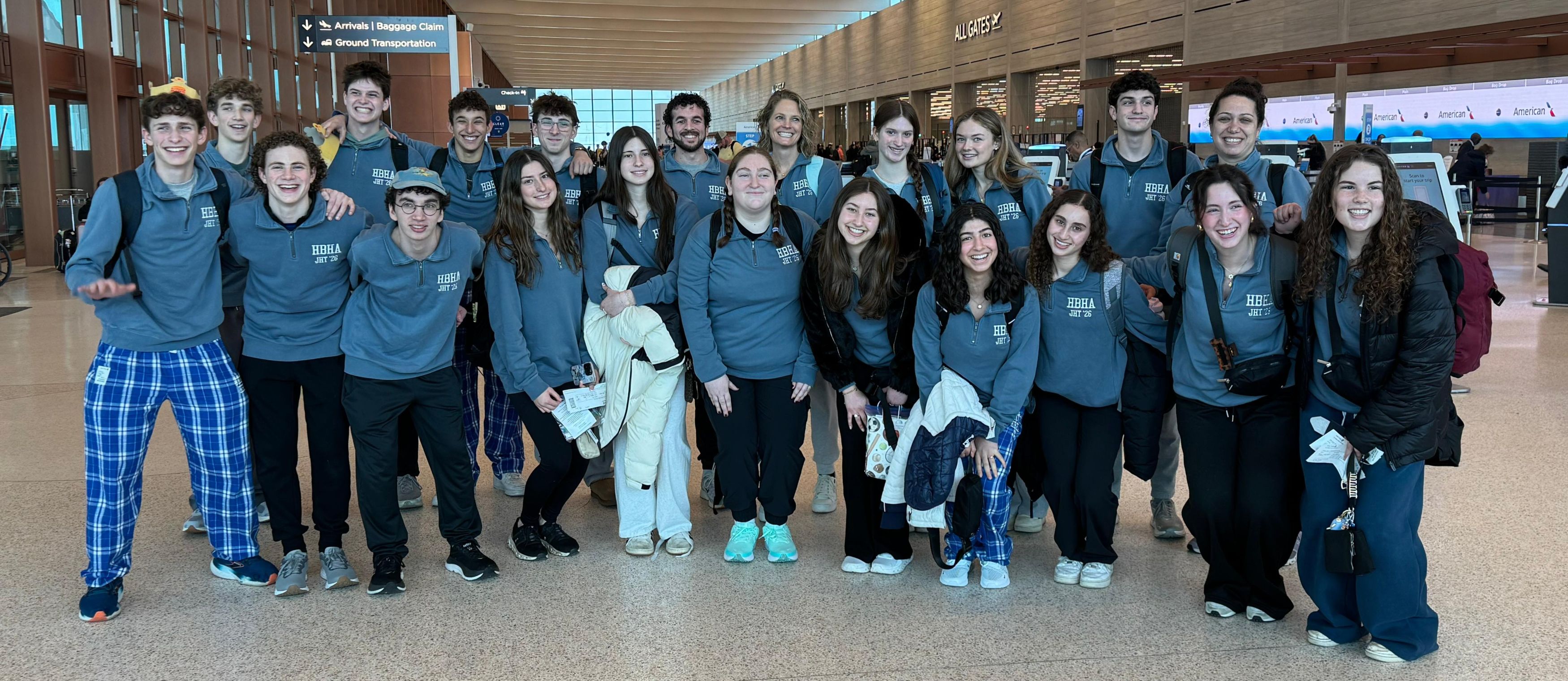
Travel, as it turns out, had plans of its own.
What should have been a straightforward trip quickly became a test of patience and resilience. Delayed flights became canceled flights, layovers stretched longer and longer, and luggage went missing. At one point, after more than 24 hours of travel, the students found themselves sleeping in the airport baggage claim area.
Throughout the delays, the group remained together under the supervision of HBHA staff, who worked closely with airline personnel to navigate the disruptions.
Early the next morning, in that same public baggage claim space, some of the boys wrapped tefillin and began to pray. An airport floor became an unexpected place for morning tefillah.
While the group continued waiting for one final missing bag, exhaustion was setting in. One of the trip leaders, Zohar, was working constantly to pivot plans and communicate with the travel companies. Eventually, an airport baggage handler approached the group and said, “Head to your hotel. Your kids have been so great. Go get some rest. We will find the bag and deliver it.”
With the help of extended family connections, the group was able to find a hotel and a nearby Chabad house. What began as a travel disruption turned into an unexpected Shabbat experience filled with warmth and community.
At Shabbat services, Rabbi Chezzy reflected that this was not the Shabbat anyone had planned, but perhaps there was a reason for the unexpected stop. Our group helped make a minyan during a yartzheit and joined a community that deeply appreciated the presence and energy of the students. Several members of the congregation approached the group afterward to share how meaningful it was to see young people bringing life into their space.
“The trip has been exhausting and eventful, but despite all that, it has been joyous. Shabbat was amazing,” said Zohar.
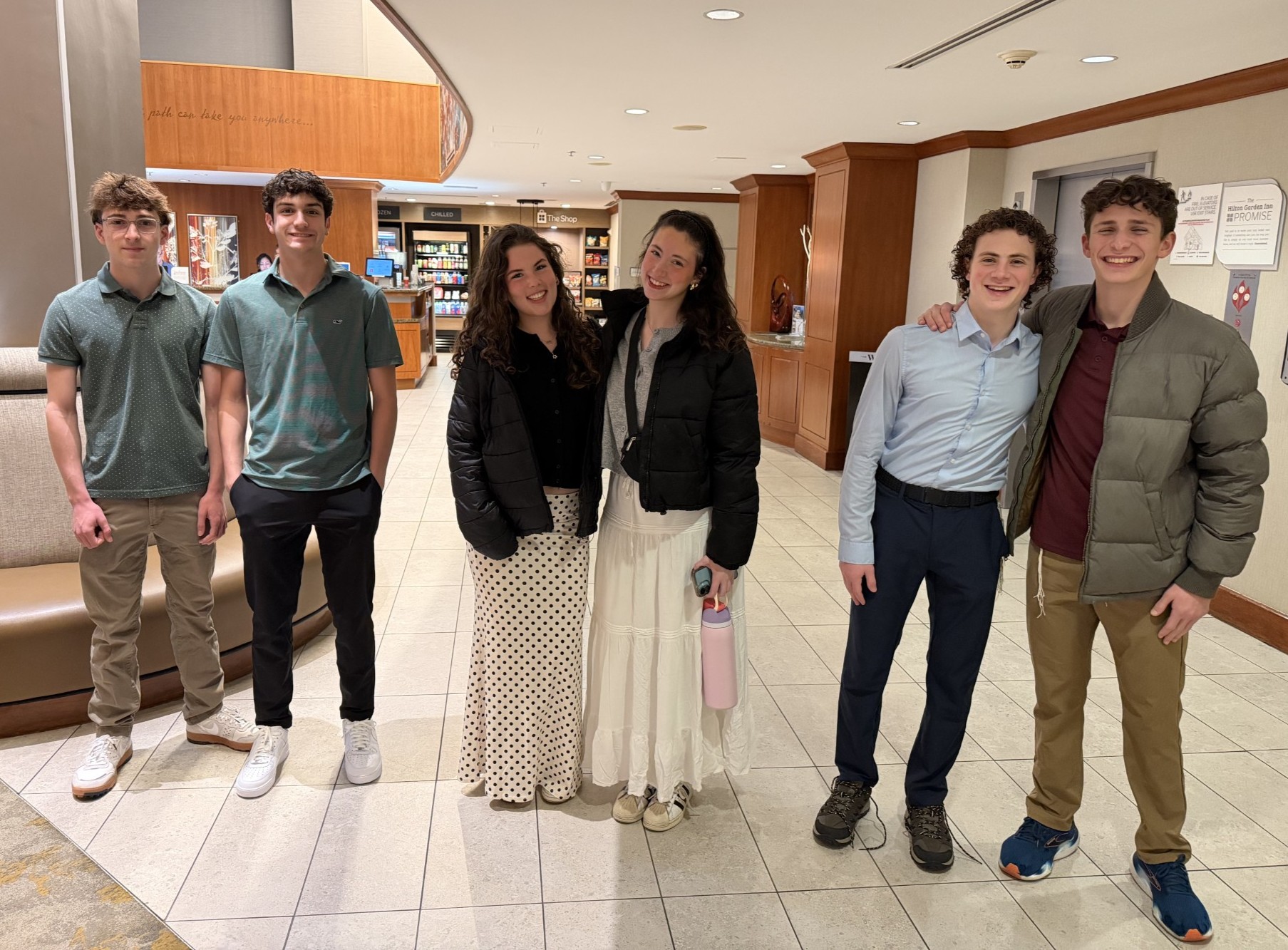
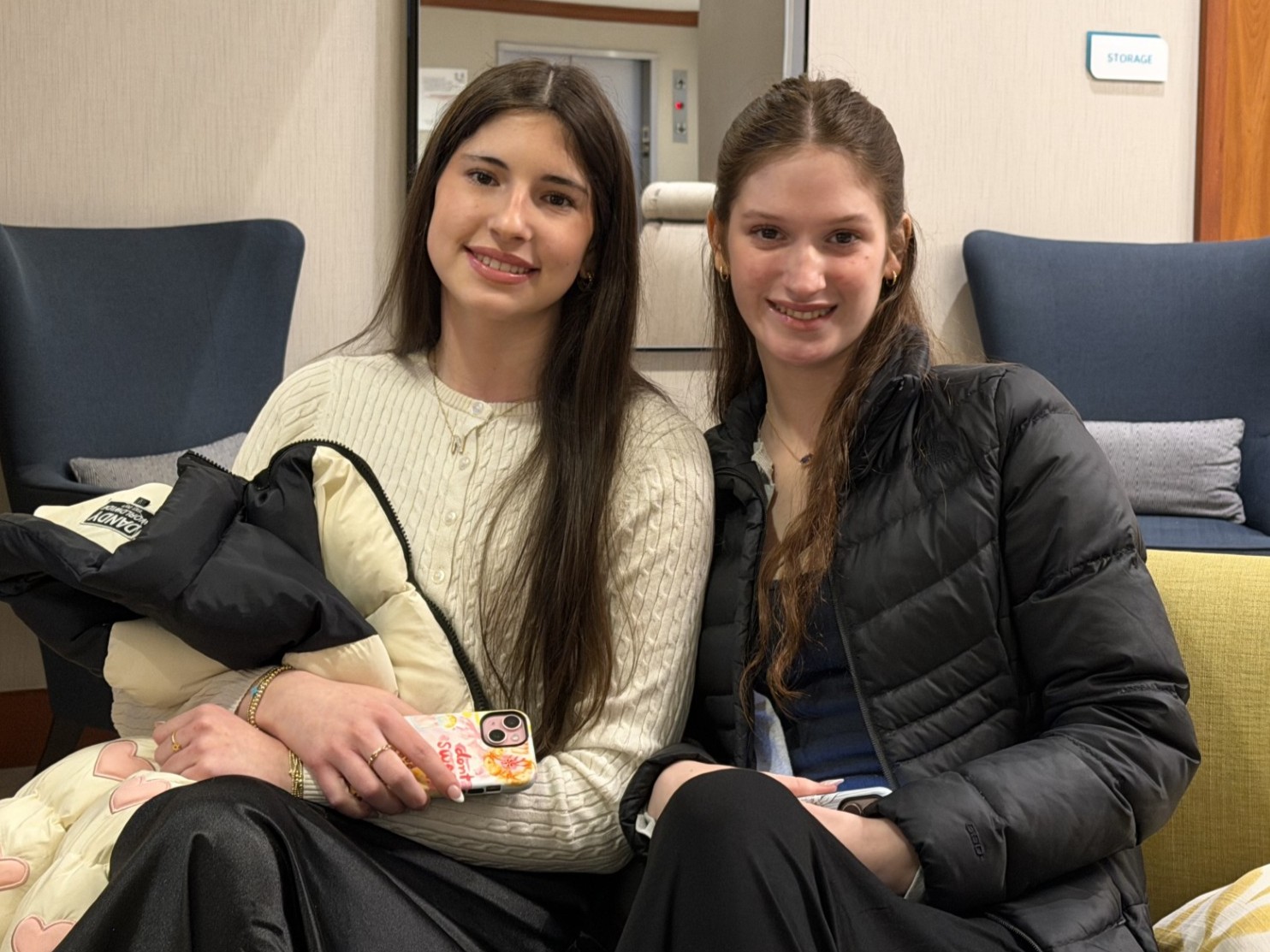

Another unexpected moment came on the drive back to the airport. An Ethiopian Jewish driver picked up a group of students and shared that he spoke Hebrew, German, and Russian in addition to his native language. The girls reacted immediately: “You speak Hebrew?!”
As the conversation continued, he shared pieces of his story. A retired biochemist, he now drives a taxi to stay busy. His son is currently serving in the IDF. His daughter is a Top Gun pilot. Throughout the ride, he kept referring to the students as “my girls” and offered one message over and over: education is the key to everything. He urged them to take their studies seriously — especially the girls — emphasizing how important education is for opportunity and independence.
.png)
After so much unexpected time in the airport, many of the staff recognized the group when they returned to fly again. Several employees greeted them warmly and helped the group navigate yet another delay.
As the plane prepared for takeoff, the flight crew came over the intercom and gave a special shout-out to HBHA, letting the entire plane know that the group was traveling on an educational trip abroad. She also shared that it was Zohar’s birthday. (It wasn’t actually Zohar’s birthday, but the students told the flight crew it was, hoping to lift everyone’s spirits after a stressful start to their travels.) The students responded with an enthusiastic round of “Happy Birthday,” filling the cabin with a moment of celebration before the long flight ahead.
On Monday morning, the group arrived at their first destination in Europe. Not long after, they headed to the local Chabad to begin their day the same way they had begun the previous one — with prayer.
“Can we read Torah?” someone asked.
Thanks to the generosity of the local Chabad, they could. So they did.
Soon after arriving, the group began their first walking tour through the city.
Almost immediately, they quite literally stumbled upon history.
Set into the sidewalks were small bronze squares — known as stumbling stones — scattered throughout neighborhoods across Europe. Each one bears the name of a person who was murdered in the Holocaust. Families can purchase and install these stones in front of homes where victims once lived.
The stones are intentionally slightly raised above the pavement. The idea is simple: when someone’s foot catches the uneven surface, they pause, look down, and ask, “What did I just bump into?” Then they read the inscription and learn the story of someone who once lived there.
Before the Holocaust, Europe was the center of Jewish life, home to more than 11 million Jews. These stones serve as quiet reminders embedded directly into the streets — ensuring that even an ordinary walk can become an act of remembrance.
For our students, encountering these markers was the first stop of the trip and the beginning of the learning that will continue in the weeks ahead.
More updates from the Jewish Heritage Trip will be shared as the journey continues.
Read about the Upper School student trips
Ninth- and tenth-graders embark on an eight-day Civil Rights Tour of the South, visiting historic sites, engaging in community service in Birmingham, and connecting with teens in Southern synagogues. This experience gives students a firsthand look at how Jews and African-Americans collaborated to create change and encourages reflection on modern-day social justice issues.
Eleventh- and twelfth-graders travel to Germany, Poland, Bulgaria, and Israel for a 22-day Jewish Heritage Trip. Students will visit key historical sites, engage with local Jewish communities, and explore Jewish life across diverse cultures, strengthening their connection to heritage, history, and global Jewish identity.