
Travel Blog
Preserved in Prague
March 24, 2026
After several intense and meaningful days in Poland, our Jewish Heritage Trip continued on to Prague, where Jewish history is not only remembered, but intentionally maintained throughout the city.
The group’s first day took them just outside Prague to Lidice, a village destroyed by the Nazis in retaliation for the assassination of a high-ranking official. Men were executed, women sent to concentration camps, and children either murdered at Chelmno or taken to be raised by German families.
But Lidice did not disappear. The Czech government, with support from around the world, rebuilt the village nearby, creating not just a memorial but a living community — a deliberate act of defiance against the Nazis’ attempt to erase an entire village from existence. Standing there, students were confronted with the scale of loss and inspired by the global effort to ensure that loss was not the final word.
.jpg)
From there, they traveled to Terezin, a ghetto and transit camp through which more than 60,000 Jews passed. While many were eventually deported to Auschwitz and other extermination camps, Terezin also became a place of spiritual and cultural resistance. Prisoners created art, documented their experiences, and even composed and performed music. Students learned about the children’s opera Brundibár, which was performed multiple times (even for Nazi officials) and included the powerful line: “Every man must stand before G-d and account for his actions.”
.jpg)
In Terezin, our students stepped into a hidden prayer room, also known as the “Secret Synagogue,” tucked away in what had once been a storage attic. Between 1942 and 1944, Jewish artist and prisoner Artur Berlinger covered the walls with murals and Hebrew texts.
In a space where Jews once gathered in secret, risking punishment to whisper those words, students sang Acheinu loudly and without fear.
.jpg)
That evening, the group gathered at Chabad for dinner, marking a joyful contrast to the day’s heavy themes as they celebrated David’s birthday together.
.jpg)
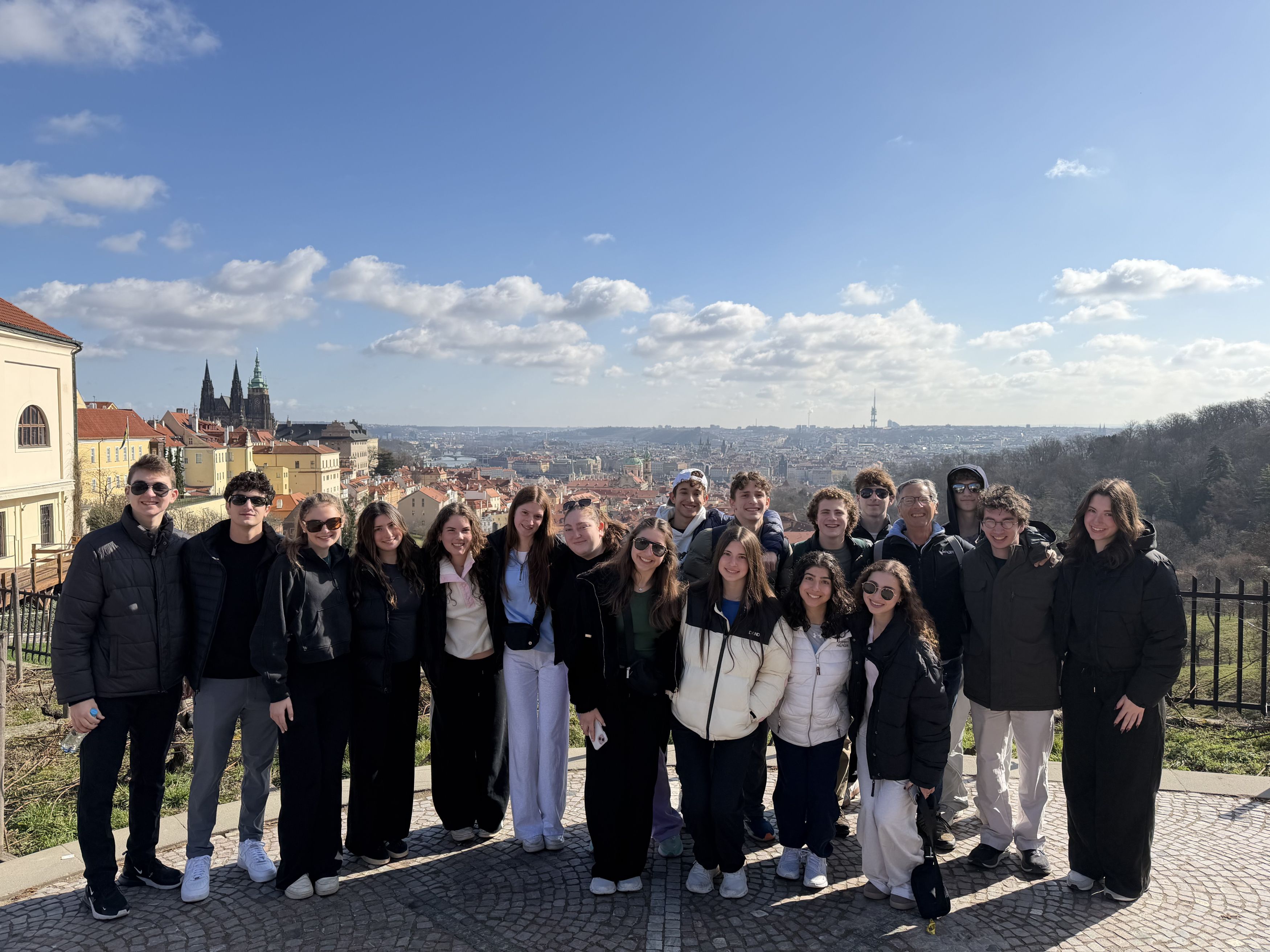
In Prague itself, students explored a city uniquely preserved. Unlike many other European centers of Jewish life, Prague’s synagogues and historic sites remain intact. Hitler intended to turn it into a “museum of an extinct race,” a chilling goal that ultimately resulted in the preservation of one of the most complete Jewish quarters in Europe.
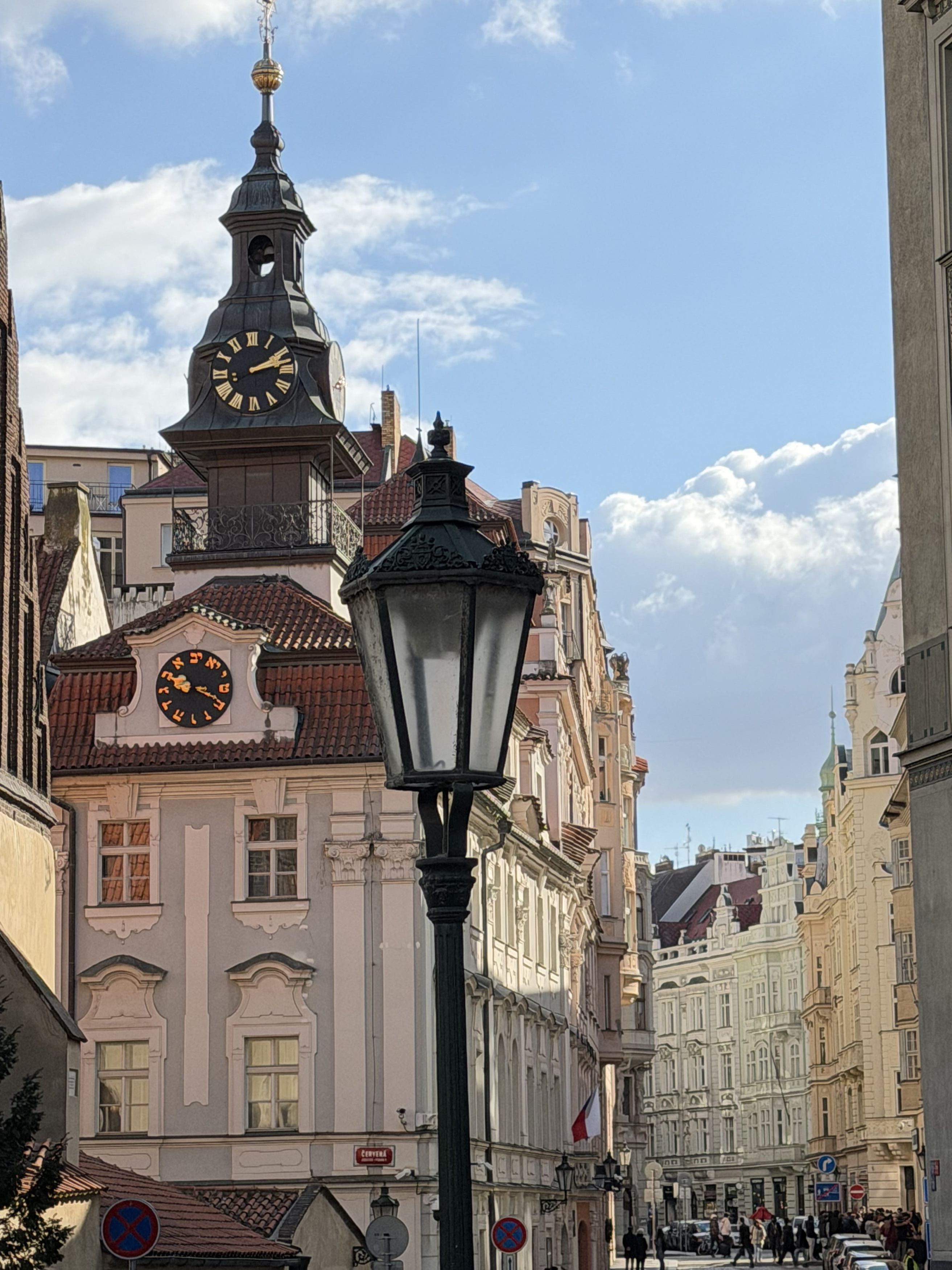
Students walked through the Old-New Synagogue, the oldest active synagogue in Europe, long associated with the Maharal and the legend of the Golem.
.jpg)
As they explored Prague’s Jewish Quarter, students saw how Jewish identity has been expressed and preserved over the centuries. One of the earliest known uses of the Star of David appears on a 1439 tombstone, a symbol of pride long before it was used as an identifying mark during the Holocaust. They also learned how other imposed markers, like the yellow hats Jews were once forced to wear, were later reclaimed and transformed into symbols of resilience and pride.
.jpg)
.jpg)
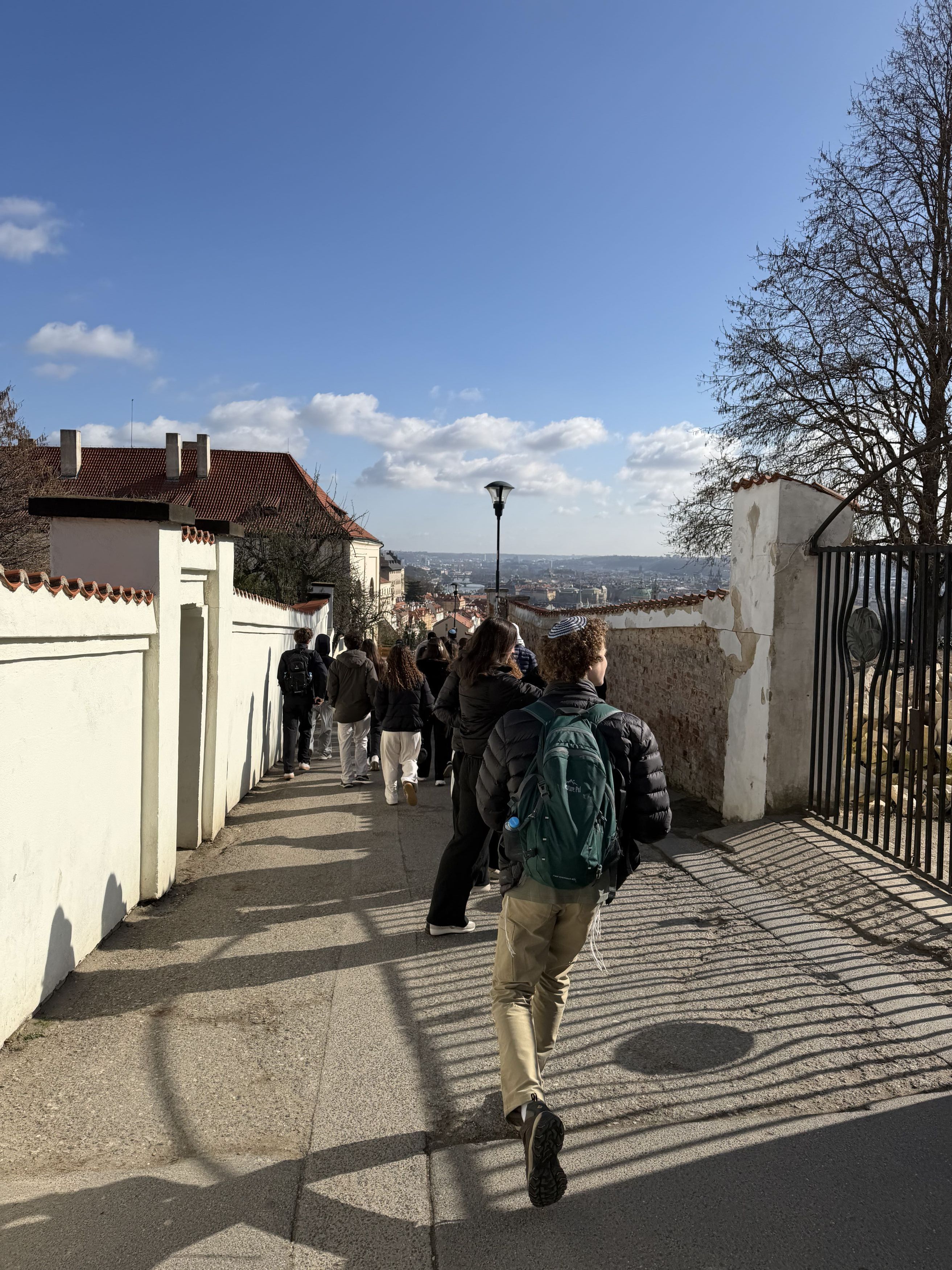
Beyond these sites, students explored the vibrancy of Prague itself. They admired the city’s architecture, earning it the nickname “the city of spires.” They also learned a fun fact: the containers used to hold b’samim (spices) for Havdalah are often shaped like spires because, historically, the valuable spices were stored at the tops of these towers.
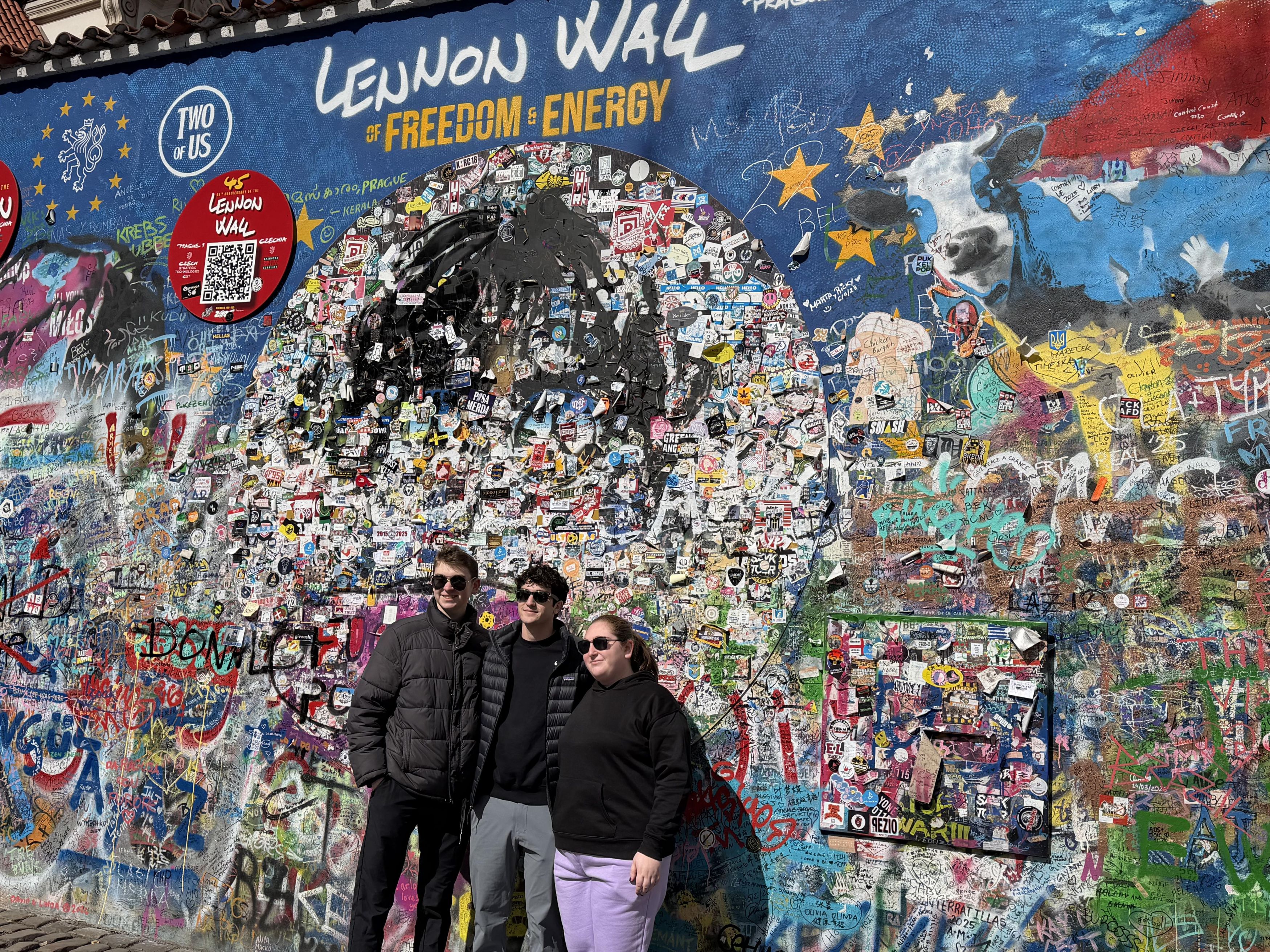
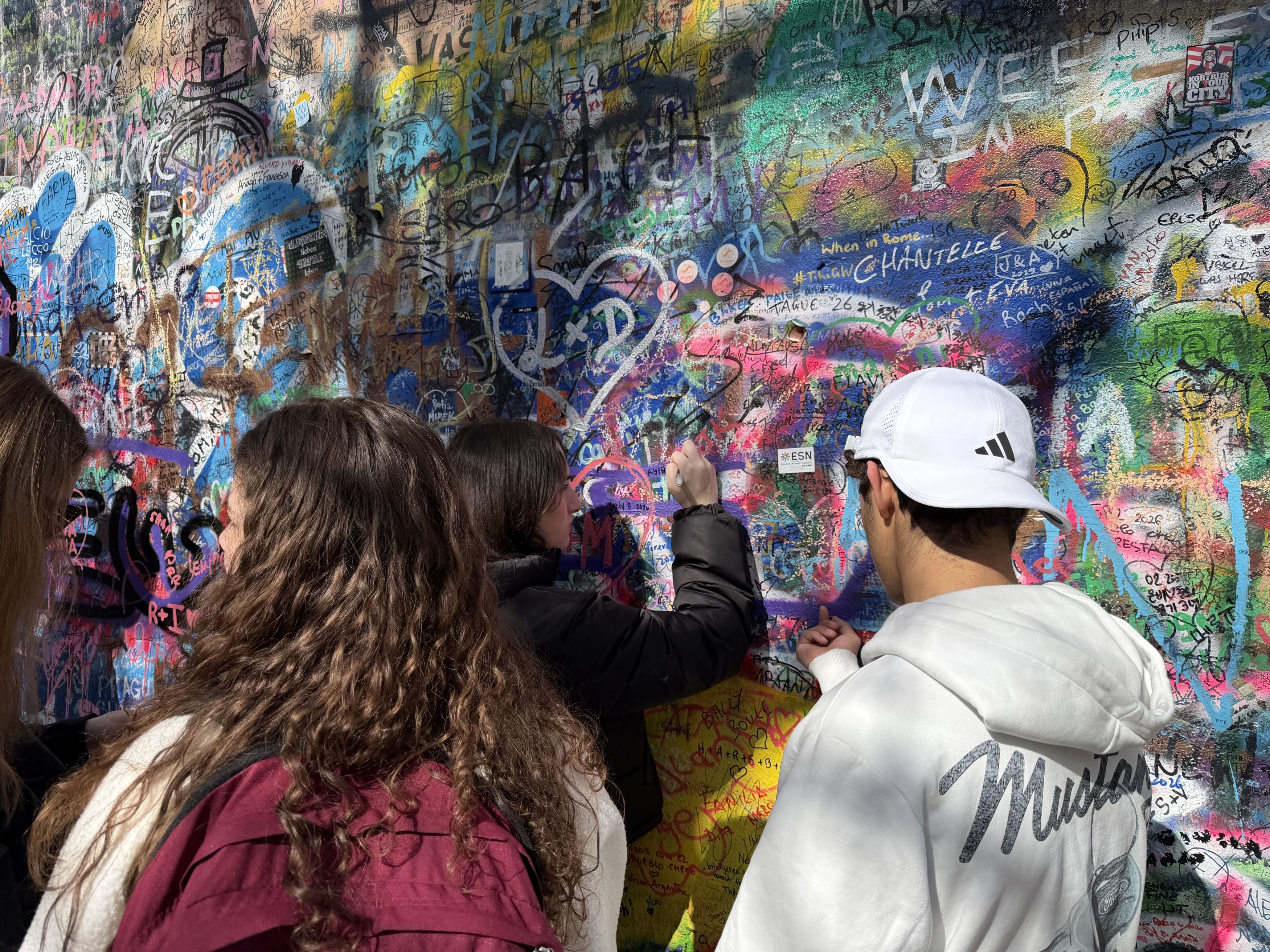
They also enjoyed the local cuisine and made a stop at the John Lennon Wall, adding their names to a colorful display of peace, expression, and freedom.
In Prague, students saw history preserved in stone, art, and tradition — synagogues that have stood for centuries, streets that carry stories of resilience, and symbols of identity reclaimed after persecution. Every step through the Jewish Quarter offered a vivid reminder that culture, Jewish identity, and community endure, even in the face of unimaginable loss.
Junior Sabra B. reflected:
“This trip is intense and stressful at times, but has been a lot of fun. I have been able to build stronger and closer relationships with other people. I feel more connected to my Jewish roots, and I am grateful to have had this experience outside the traditional classroom.”
.jpg)
Read about the Upper School student trips
Ninth- and tenth-graders embark on an eight-day Civil Rights Tour of the South, visiting historic sites, engaging in community service in Birmingham, and connecting with teens in Southern synagogues. This experience gives students a firsthand look at how Jews and African-Americans collaborated to create change and encourages reflection on modern-day social justice issues.
Eleventh- and twelfth-graders travel to Germany, Poland, Bulgaria, and Israel for a 22-day Jewish Heritage Trip. Students will visit key historical sites, engage with local Jewish communities, and explore Jewish life across diverse cultures, strengthening their connection to heritage, history, and global Jewish identity.