
Travel Blog
Posts Tagged "Civil Rights Tour"
Tracing the Road to Justice
March 20, 2026
HBHA’s 9th and 10th graders have officially begun their Civil Rights Tour of the American South, a journey designed not just to study history, but to encounter it face-to-face, in the very places where it unfolded.
After months of preparation, students departed early Wednesday morning, beginning their journey by reciting the traveler’s prayer, led by JFS Chaplain and HBHA parent, Rabbi Yonatan Rudnick, before setting off from Kansas City through Arkansas and into Mississippi. Their first major stop was Little Rock Central High School. There, National Park Service Ranger Alex told stories about the Little Rock Nine, the nine black students who faced intense hostility when they integrated the school in 1957.
The stories weren’t just about the students themselves. Alex also talked about the people who risked their safety to support them — and the thousands who did nothing at all. The students weren’t just asked to think about that history, they were challenged to wrestle with it, to understand the cost of staying silent, and to consider what it means to stand up to hate today.
Freshman Lia F. reflected,
“Our visit to Central High School in Little Rock was both profound and empowering. I was surprised by the scale of the school, and it was deeply moving to stand on the same ground where history was made, rather than simply learning about it in class.”
.JPG)
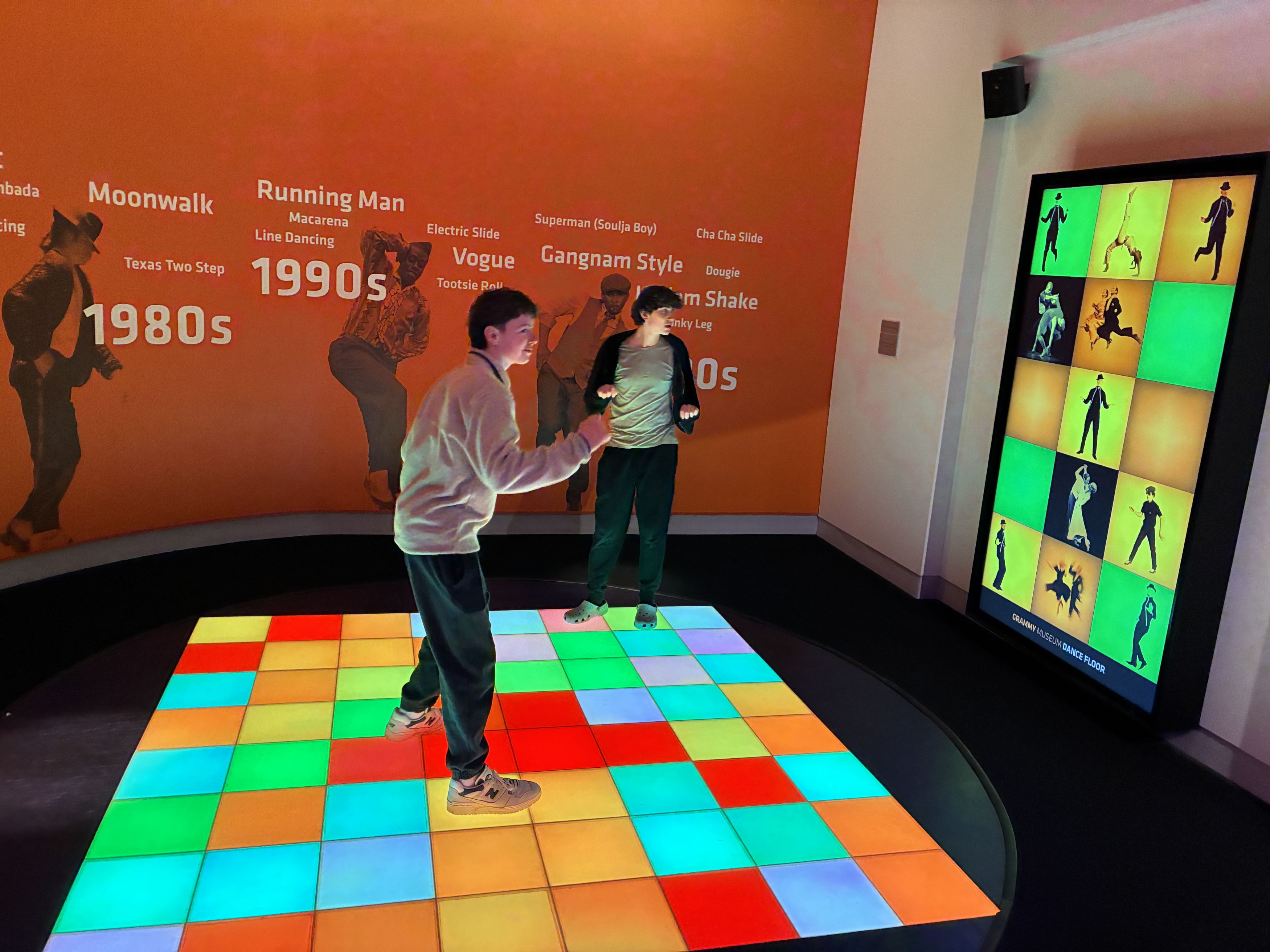
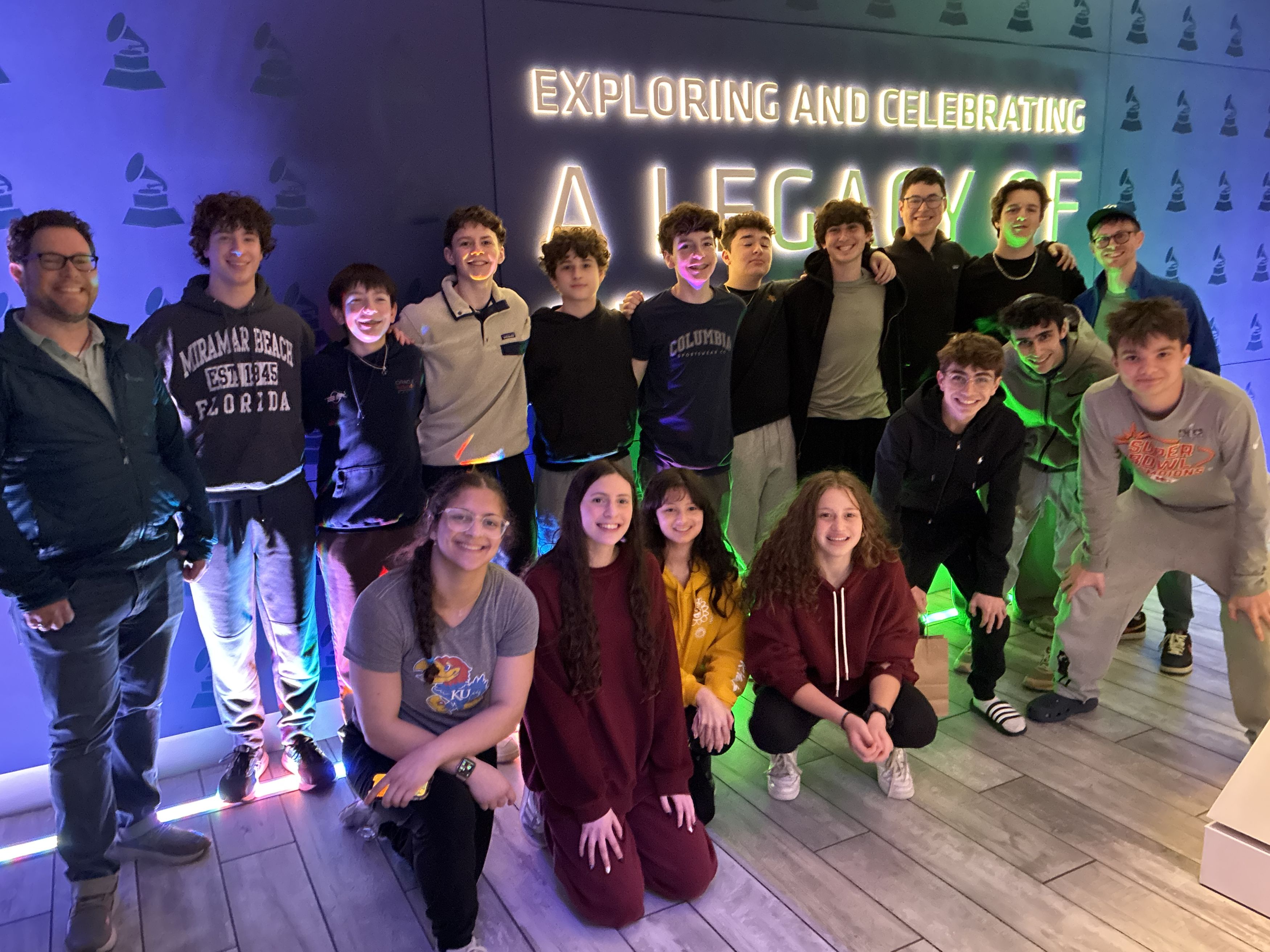
After absorbing the weight of Little Rock, the group hit the road for Cleveland, MS, where a lighter stop at the Grammy Museum gave everyone a chance to stretch, have some fun, and recharge. Students enjoyed exploring the history of American music through hands-on exhibits and interactive displays.
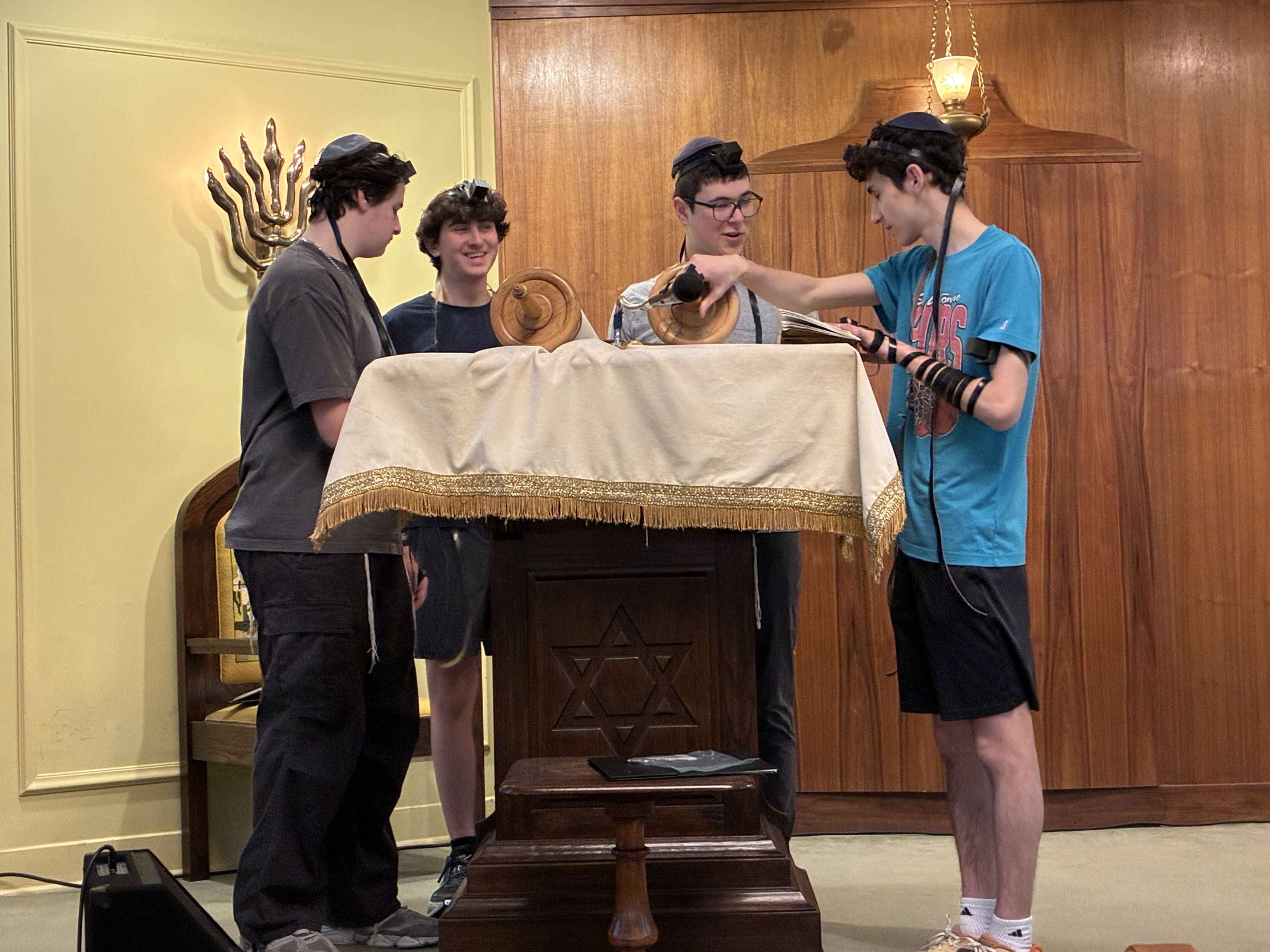
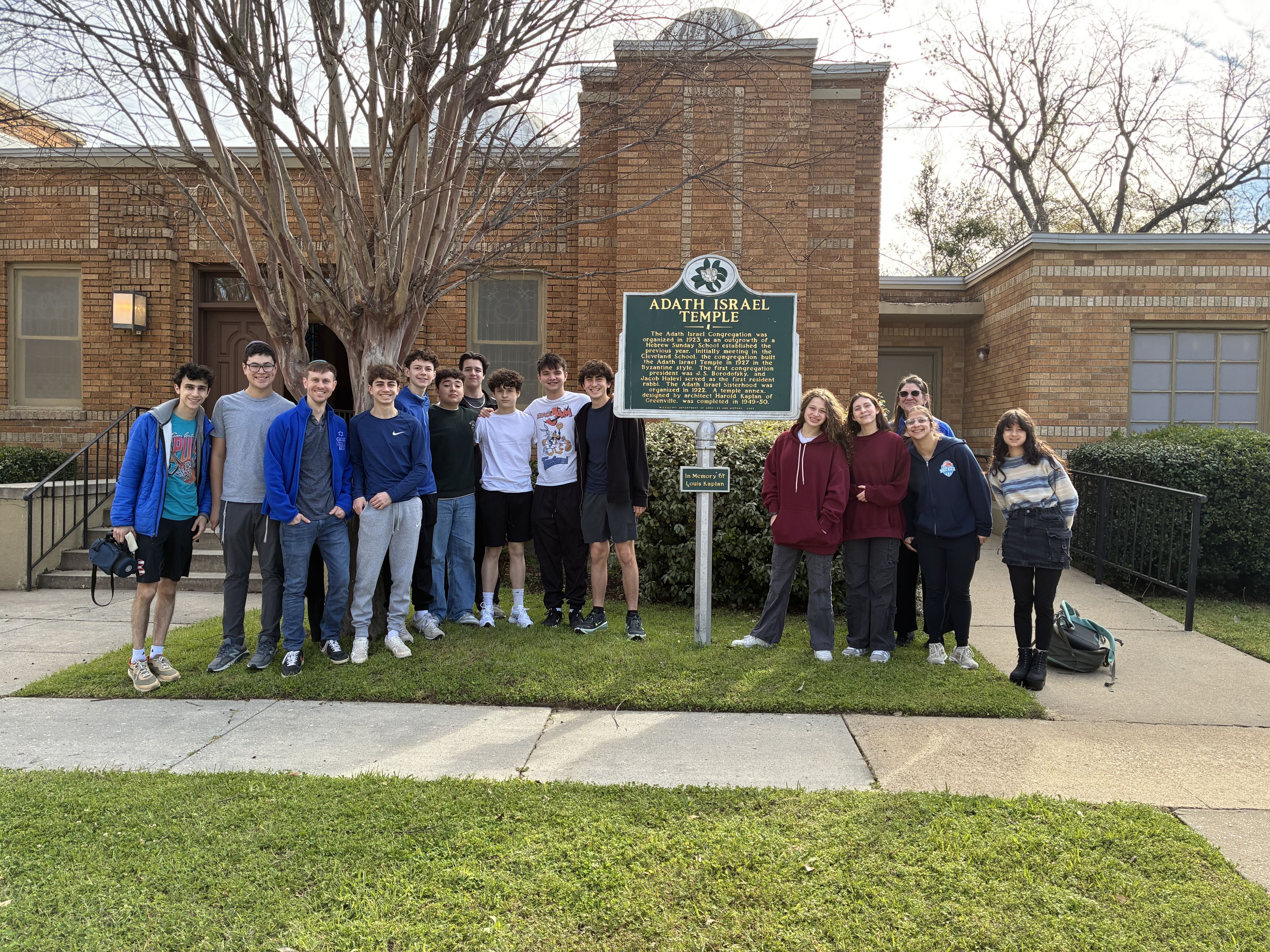
Thursday morning, Rosh Chodesh Nisan, started at Temple Adath Israel, a historic synagogue on the National Register of Historic Places. Students prayed, read Torah, and learned about the local Jewish community from Rabbi Scott Kramer and longtime congregant Barbara Livingston. The visit gave them a deeper understanding of the enduring presence of Jewish life in the area and the role of community in sustaining it.
Later that day, the group visited sites connected to the 1955 lynching of Emmett Till, murdered at only 14 years old–the same age as many of the students on this trip. In Ruleville, Money, and Sumner, they encountered a history that is difficult to process from a distance — and impossible to ignore up close.
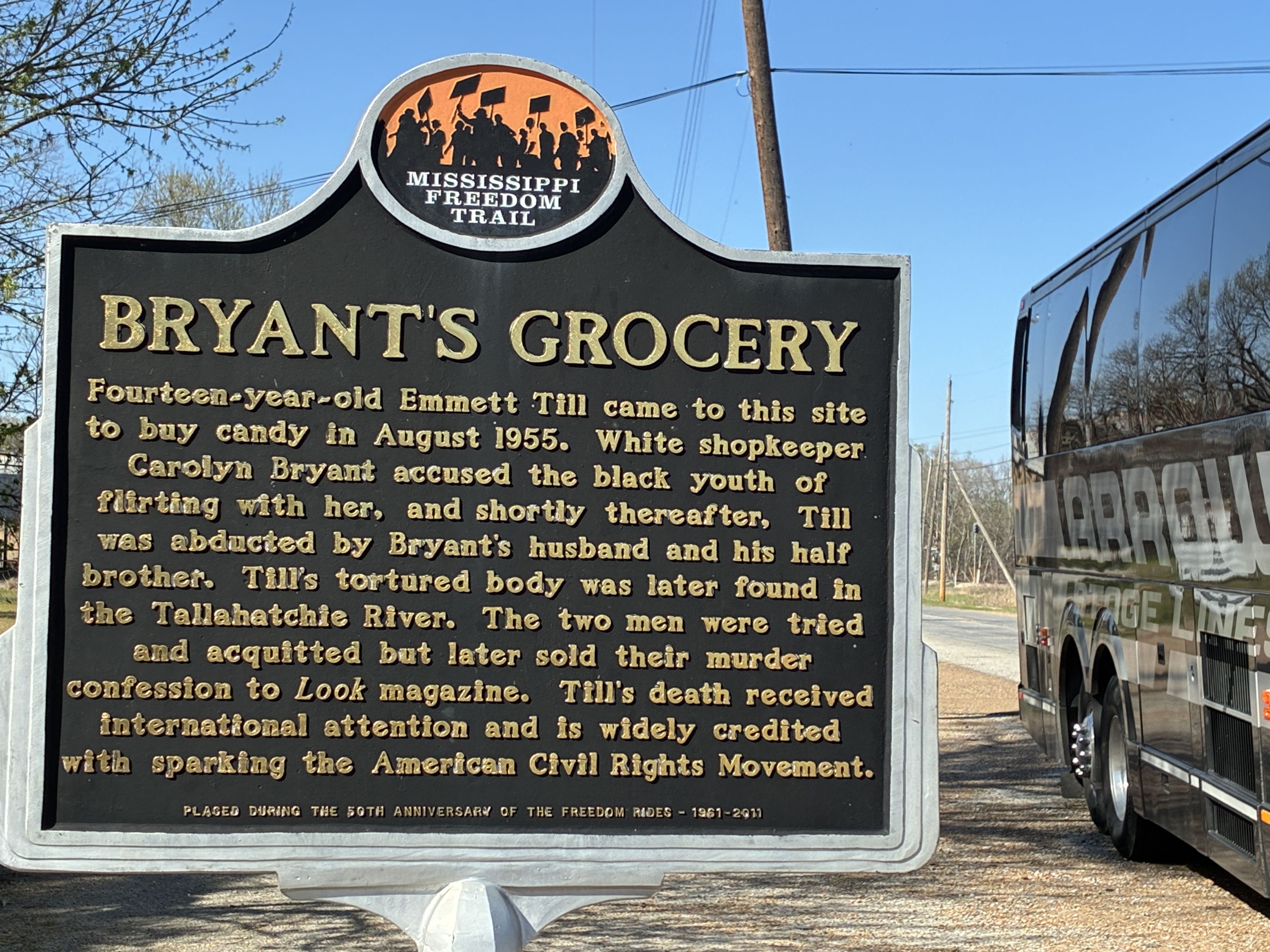
Sophomore Eitan S. reflected:
“Being at the Emmett Till sites felt different than just hearing about a hate crime because I was there. I stood where he got tortured, sat in the courtroom where they argued for his innocence, and took pictures where his body was dragged out of a river… He wasn’t just a story I briefly heard about. He was an innocent person that was a victim of the evils of racism… Being there made me feel the significance of Till’s murder, and it definitely was an eye-opening experience.”
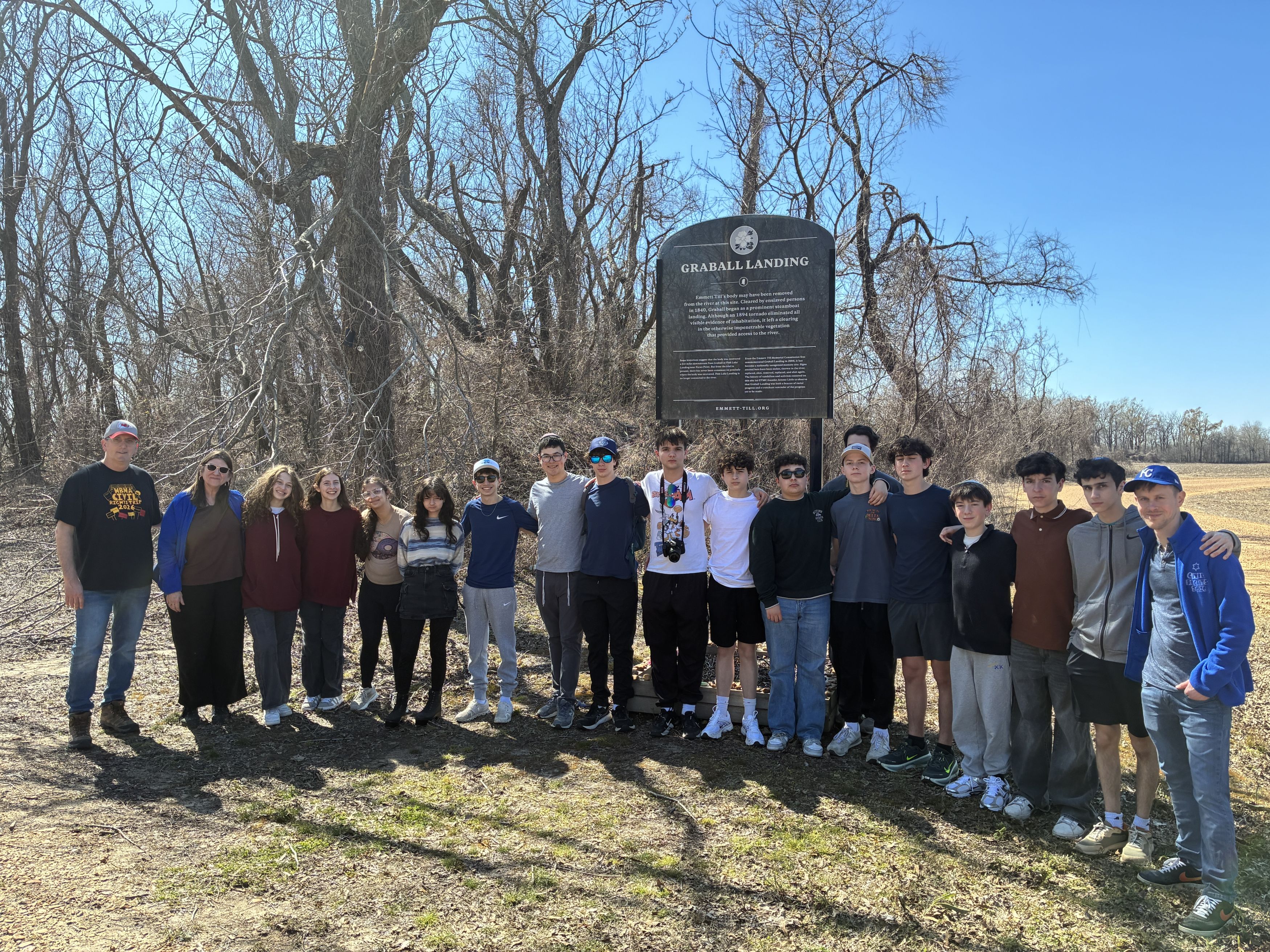
Moments like these are at the heart of the Civil Rights Tour. They are not easy, but they are essential. From the teenagers of the Little Rock Nine to 14-year-old Emmett Till, students are encountering a history shaped by people their own age. In Little Rock, they saw what it meant to stand up. In Mississippi, they saw the consequences when hatred went unchecked. These experiences challenge students to step into history, understand the choices people made and their consequences, and recognize that the actions young people take matter. Not someday, but now.
Read about the Upper School student trips
Ninth- and tenth-graders embark on an eight-day Civil Rights Tour of the South, visiting historic sites, engaging in community service in Birmingham, and connecting with teens in Southern synagogues. This experience gives students a firsthand look at how Jews and African-Americans collaborated to create change and encourages reflection on modern-day social justice issues.
Eleventh- and twelfth-graders travel to Germany, Poland, Bulgaria, and Israel for a 22-day Jewish Heritage Trip. Students will visit key historical sites, engage with local Jewish communities, and explore Jewish life across diverse cultures, strengthening their connection to heritage, history, and global Jewish identity.